

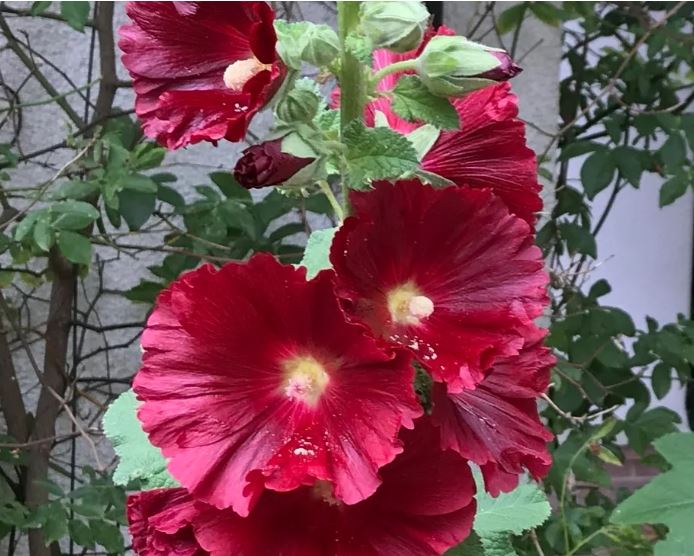

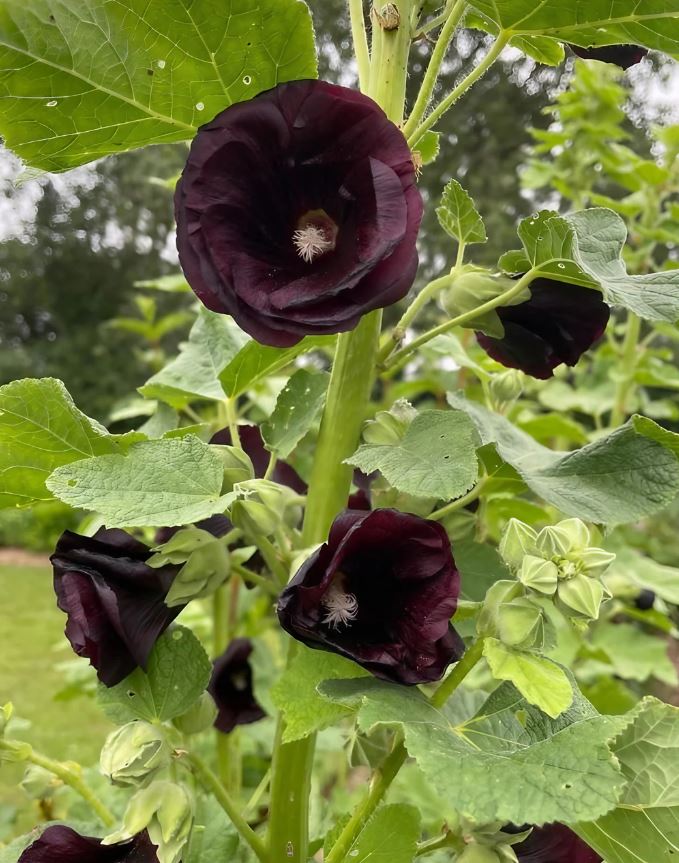
Towering over garden fences with their vibrant spires of blooms, Alcea rosea, better known as hollyhocks, are a beloved staple in gardens worldwide. But beyond their striking beauty lies a rich history that spans centuries and continents. From ancient origins to Victorian cottage gardens, the story of hollyhocks is as colourful as their petals. Join us as we uncover the fascinating history of Alcea rosea and why it remains a gardener’s favourite today.
Origins of Alcea rosea
Alcea rosea is believed to have originated in Asia, particularly in regions of China and the Middle East, where it grew wild thousands of years ago. Historical records suggest hollyhocks were cultivated in ancient China as early as the 5th century, valued for both their ornamental beauty and medicinal properties. The plant’s name, derived from the Old English “holy” and “hoc” (mallow), hints at its early association with healing and sacred spaces.
By the Middle Ages, hollyhocks had made their way along trade routes to Europe, likely via the Silk Road. Their tall, stately blooms quickly caught the eye of gardeners and herbalists alike, cementing their place in both practical and decorative landscapes.
Hollyhocks in Medieval and Renaissance Europe
During the Renaissance, hollyhocks became a symbol of fertility and abundance, thanks to their prolific blooms and towering height (reaching up to 8 feet). They were a common sight in cottage gardens, where their vibrant colours, pink, red, white, yellow, and even deep purple, added drama to humble plots. Want to grow hollyhocks in your own garden? Check out our guide on How to Choose the Best Soil for Your Flower Garden (#) for tips on creating the perfect environment.
Hollyhocks in the Victorian Era
The Victorian era was a golden age for hollyhocks, as the period’s obsession with romantic, naturalistic gardens elevated their status. Hollyhocks epitomised the cottage garden aesthetic, with their tall stalks lining picket fences and framing doorways. In the language of flowers, a popular Victorian pastime, hollyhocks symbolised ambition and fruitfulness, reflecting their ability to thrive in diverse conditions.
Victorian gardeners also experimented with hybridizing Alcea rosea, leading to the wide range of colors and double-flowered varieties we see today. These efforts made hollyhocks a must-have for both rural cottages and grand estates.
Cultural Significance Across the Globe
Hollyhocks have woven themselves into the cultural fabric of many regions:
Asia: In China, hollyhocks were associated with longevity and prosperity, often planted near homes for good fortune.
Middle East: In Persian gardens, their height and vibrant blooms symbolised spiritual aspiration.
North America: Colonists brought hollyhocks to the New World in the 17th century, where they became a staple in colonial and pioneer gardens, valued for their hardiness.
Today, hollyhocks remain a favourite in heritage gardens and are celebrated at events like heirloom plant festivals. Their ability to attract pollinators also makes them a great addition to eco-conscious gardens. Learn how to support bees with hollyhocks in our post on How to Create a Bee-Friendly Flower Garden (#).
Hollyhocks in Modern Gardens
Alcea rosea continues to charm gardeners with its versatility and low-maintenance nature. This biennial or short-lived perennial thrives in full sun and well-draining soil with a pH of 6.0–7.0, making it ideal for borders, fences, or as a backdrop to shorter plants. Modern cultivars offer single and double blooms, with dwarf varieties for smaller spaces.
Hollyhocks are also a boon for pollinators, drawing bees and butterflies with their nectar-rich flowers. Their resilience in poor soils and drought tolerance make them a sustainable choice for eco-friendly gardens. For more on sustainable gardening, see our guide to Organic Gardening Tips for Beginners (#).
Growing Tips for Alcea rosea
Ready to add hollyhocks to your garden? Here are quick tips:
Soil: Plant in well-draining, loamy soil. Amend with compost for best results (see How to Choose the Best Soil for Your Flower Garden (#)).
Sun: Ensure 6+ hours of direct sunlight daily.
Water: Keep soil moist but not waterlogged, especially during the first year.
Support: Stake tall stalks to prevent wind damage.
Pests: Watch for rust, a common fungal issue; use organic fungicides if needed.
For more planting advice, check out Top 10 Perennials for Easy Gardening (#).
Final Thoughts
From ancient Chinese gardens to modern pollinator patches, Alcea rosea has captivated hearts for centuries with its towering beauty and rich history. Whether you’re drawn to its medicinal past, cultural symbolism, or stunning blooms, hollyhocks are a timeless addition to any garden. Plant a few seeds, and you’ll be growing a piece of history in your backyard.
 Blossoms & Blooms