

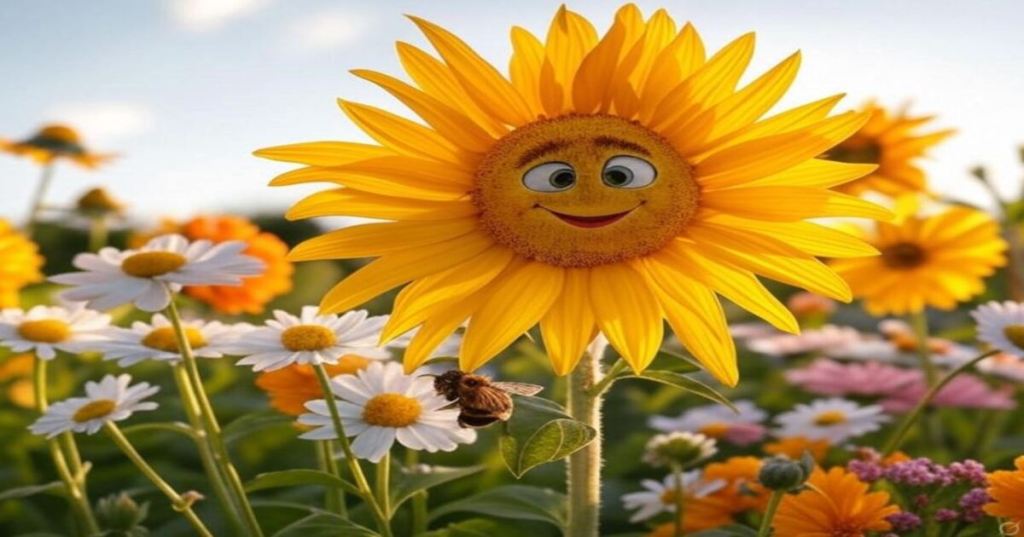
Picture yourself wandering into a botanical circus, where the performers are flowers, each sporting a dazzling costume and a mischievous grin. Welcome to the Asteraceae family, a riotous troupe of blooms including sunflowers, daisies, dandelions, marigolds, and echinacea. These petal-packed superstars are ready to sweep you, dear reader, into adventure brimming with humour, wonder, and a sprinkle of floral mischief.
Whether you’ve never sniffed a flower or you’re just curious, prepare to fall head over heels for these quirky characters and their roles in nature, culture, and even your snack drawer. Let’s dive into the composite charm of Asteraceae and see why these flowers are the botanical world’s greatest show.
The Composite Charm of Asteraceae
At first glance, an Asteraceae flower like a cheerful daisy or a towering sunflower seems like a single bloom. But lean closer, and you’ll uncover a botanical sleight-of-hand: each “flower” is a pseudanthium, a cluster of tiny florets posing as one. Think of it as a floral Broadway production, with ray florets (the petal-like outer bits) strutting as chorus dancers and disc florets (the central crowd) stealing the spotlight. This capitulum, or flower head, sits atop an involucre a leafy phyllary hug that holds the cast together.
It’s a masterclass in teamwork, with syngenesious anthers (pollen-producing parts) syncing like a pollen choir to tempt bees with their “candy.”
This composite structure isn’t just for show it’s a survival superpower. By packing dozens of florets into one head, Asteraceae plants like chrysanthemums and zinnias maximize their appeal to pollinators. One bee visit can pollinate a whole stage, making these flowers efficiency experts. When the curtain falls, the florets transform into achenes, tiny seed-like fruits often topped with a feathery pappus that floats away like a dandelion’s “wish.” With over 32,000 species, from cosmos to goldenrod, Asteraceae rules habitats from prairies to roadsides, that teamwork makes the dream work in the floral world.
Pollinators and Petals
Now, let’s buzz into the lively world of pollinators, where Asteraceae flowers are the VIP lounges of the insect realm. Their composite heads are like neon-lit diners, open for nectar-hungry guests from dawn to dusk. Take the sunflower (Helianthus annuus), a floral rockstar with its heliotropisma sun-chasing dance where young blooms swivel like solar-powered fans. This move ensures maximum visibility for honeybees (Apis mellifera), who dive into the disc florets for nectar, their fuzzy bodies dusted like overzealous bakers.
A single sunflower can feed a hive, making it a hero in beekeeping. Bumblebees (Bombus spp.) also flock to sunflowers, their chunky frames waddling across the florets in a comical pollen harvest, ensuring achenes for the next season.
Daisies (Bellis perennis) and zinnias roll out the red carpet for butterflies, like the vibrant Monarch (Danaus plexippus) and Painted Lady (Vanessa cardui). These delicate fliers sip nectar with straw-like proboscises, drawn to the ray florets’ bright ligulesthink floral billboards shouting, “Free snacks!” The involucre’s phyllaries create a safe sipping zone, while pollen sticks to butterfly wings, hitching a ride to the next bloom.
This cross-pollination fuels biodiversity in meadows, where daisies and zinnias thrive as annuals or perennials. Even hoverflies (Syrphidae), those bee-mimicking daredevils, join the party, munching pollen on marigolds and cosmos while keeping pests at bay.
But not every guest is welcome. Ragweed (Ambrosia artemisiifolia), the sneeze-inducing villain, churns out pollen so potent it’s practically a biological prank, triggering allergies in millions. Poor goldenrod, with its sunny spikes, often takes the blame, despite being a pollinator’s dream. This drama highlights Asteraceae’s dual role: beloved by bees, dreaded by tissues. Yet, even ragweed supports biodiversity, feeding insects in harsh habitats where others falter, proving every flower has a part to play.
From Weeds to Wonders
Asteraceae flowers are the ultimate survivors, thriving as annuals, perennials, or drought-tolerant rebels in habitats from alpine meadows to urban cracks. The dandelion (Taraxacum officinale) is the poster child for this grit, sprouting in lawns and sidewalks with a “try and stop me” smirk. Its pappus-topped achenes float on the breeze, granting “wishes” to kids and headaches to gardeners. But don’t scoff this “weed” is a nutritional gem, with vitamin-packed leaves and roots brewed into coffee-like drinks. It’s a master of succession, colonizing bare soils and paving the way for richer ecosystems.
Then there’s the artichoke (Cynara scolymus), a culinary diva with edible armor. Its spiky phyllaries guard a tender heart, proving tough plants have a soft side. Or consider lettuce (Lactuca sativa), a sneaky Asteraceae cousin we munch without a thought. These plants shine in restoration projects, where species like echinacea and black-eyed Susans revive grasslands, turning barren fields into pollinator havens. Their adaptability whether in prairies or roadside ditches makes Asteraceae a cornerstone of biodiversity, proving that “weeds” are often wonders in disguise.
Flowers in Food, Medicine, and Mischief
Asteraceae’s versatility blooms beyond ecology, dazzling in human culture with roles in food, medicine, and a touch of mischief. In horticulture and floriculture, zinnias and marigolds light up gardens like living fireworks, while companion planting with these blooms keeps pests at bay. Beekeeping owes a debt to Asteraceae sunflower and goldenrod nectar yields honey so golden it could star in a fairy tale. And the edible delights? Sunflower seeds for snacking, safflower oil for cooking, and chamomile tea for soothing frazzled nerves
Medicinally, Asteraceae is a botanical pharmacy. Echinacea (Echinacea purpurea) is the star, its roots and leaves brewed into teas or tinctures to boost immunity or at least make you feel like a wellness warrior. Studies suggest its alkaloids may reduce cold symptoms, though it’s no magic bullet. Arnica (Arnica montana) salves soothe bruises and muscle aches, a favorite among athletes who swear by its anti-inflammatory powers (just don’t eat it, it’s toxic internally).
Chamomile (Matricaria chamomilla) isn’t just for tea; its essential oils calm skin irritations and ease anxiety, earning its muse-like status. Tansy (Tanacetum vulgare), the misunderstood rebel, was once a medieval insect repellent and abortifacient, but its toxicity keeps it on the sidelines today. Even dandelion roots, rich in inulin, support digestion and liver health, proving weeds can heal.
But mischief lurks. Invasive species like Canada thistle (Cirsium arvense) overrun fields, outcompeting crops with prickly determination. Ragweed’s pollen terrorism is legendary, and safflower, once a vibrant dye for Egyptian mummy wrappings, has a cheeky history of adding color to the afterlife. These quirks make Asteraceae a family of contradictions, equally at home in a vase, a salad, or a cautionary tale.
Their symbolism shines, too: sunflowers beam joy, daisies whisper innocence, and thistles stand tall as emblems of resilience in Scottish lore.
The science behind these uses is just as fascinating. Palynology, the study of pollen, reveals how Asteraceae’s grains (like tiny spiked orbs) stick to pollinators, a bit like floral Velcro. Taxonomy sorts the family’s dizzying diversity, from Helianthus to Taraxacum, while botany unravels their composite magic. In restoration, Asteraceae’s role in grasslands and urban wildflower patches highlights their ecological heft, making them stars of both science and whimsy.
A Call to Adventure
As our floral circus draws to a close, let’s marvel at the Asteraceae family’s brilliance. From the taxonomy of marigolds to the palynology of pollen (think bee detective work), these flowers weave science and charm into every ligule. They’re the heart of meadows, the soul of gardens, and the unsung heroes of city cracks.
So, grab a magnifying glass and step outside. Spot a dandelion granting wishes, a sunflower dancing with the sun, or a zinnia dazzling a butterfly. Each is a ticket to the Asteraceae’s vibrant cast, ready to charm you with their composite magic.
This is just the start of your floral journey. The Asteraceae family, with its quirky characters and endless tales, beckons you to keep exploring. Plant a marigold, sip chamomile tea, or visit a local park to meet these blooms in person. Let them remind you that nature is the grandest, most whimsical stage of all and you’re invited to the front row.
 Blossoms & Blooms