

The Enchanting World of Epiphytes: Nature’s Aerial Wonders

Hello, dear plant enthusiasts! It’s your favourite botanist here, thrilled to share with you the magical world of epiphytes—those captivating plants that seem to defy gravity by thriving in the air. With my years of experience growing, maintaining, arranging, and displaying flowers and plants, I’m excited to guide you through the essentials of epiphytes. By the end of this blog, you’ll have a clear and precise understanding of these unique beauties and perhaps even feel inspired to welcome them into your own green spaces. Let’s dive in!

What Are Epiphytes?

Epiphytes are extraordinary plants that grow on other plants, typically trees, without taking nutrients or water from them. Unlike parasites, epiphytes are self-sufficient, using their host merely as a perch to reach sunlight and capture moisture from the air. The term “epiphyte” comes from the Greek words epi (upon) and phyton (plant), perfectly describing their lifestyle of living “upon” others. You’ve likely encountered famous examples like orchids, bromeliads, and certain ferns, stars of the epiphytic world!

Where Do Epiphytes Thrive?

In nature, epiphytes flourish in diverse environments, but they’re most abundant in tropical rainforests, where high humidity, frequent rain, and tall trees create ideal conditions. They cling to branches, trunks, and even rocks, basking in dappled sunlight and sipping moisture from mist, dew, or rainfall. Some, like the Spanish moss draping southern oaks, also appear in temperate regions. Their adaptability is a testament to nature’s ingenuity, and I’ve spent countless hours marvelling at their resilience in the wild and nurturing them in gardens.

How Do Epiphytes Survive?

Epiphytes have evolved remarkable strategies to thrive without soil:

  • Roots for Anchoring and Absorption: Their roots grip hosts tightly, while specialised structures like aerial roots absorb water and nutrients from the air or trapped debris. Orchids, for instance, have thick, spongy roots that soak up moisture like tiny sponges.
  • Water Storage: Many epiphytes, such as bromeliads, form rosettes of leaves that create a “tank” to collect rainwater and organic matter. I’ve always found it delightful to peek into these natural cups and see tiny ecosystems at work!
  • Efficient Nutrient Use: They snatch nutrients from dust, decaying leaves, or even bird droppings, making them masters of resourcefulness.

Popular Epiphytes to Know

Here are a few epiphytes I adore working with and displaying:

  1. Orchids: With their stunning blooms, orchids like Phalaenopsis or Cattleya are epiphytic gems. They’re perfect for beginners, needing just a bark mount and occasional misting.
  2. Bromeliads: Think of the vibrant Tillandsia (air plants) or Guzmania with their colourful bracts. These are a joy to arrange in creative displays—try hanging them in glass orbs!
  3. Ferns: The staghorn fern (Platycerium) with its antler-like fronds is a showstopper. I love mounting them on wooden plaques for a rustic look.
  4. Spanish Moss: This flowing Tillandsia usneoides adds a whimsical touch, draping beautifully over branches or in arrangements.

Growing and Maintaining Epiphytes

Caring for epiphytes is easier than you might think, and I’m here to encourage you to give it a try! Here’s how:

  • Light: Provide bright, indirect light—mimic the filtered sun of a forest canopy. A north or east-facing window works well indoors.
  • Water: Mist or soak them weekly, depending on humidity. I often dunk my air plants in water for 10-15 minutes, then shake off excess to prevent rot.
  • Mounting: Skip soil! Attach them to bark, wood, or moss-covered boards with wire or glue. I’ve had great fun experimenting with driftwood displays.
  • Humidity: Aim for 50-70% humidity. In dry climates, a humidifier or a pebble tray with water does wonders.
  • Airflow: Good circulation prevents fungal issues. A gentle fan can replicate the breezy treetops they love.

Arranging and Displaying Epiphytes

Epiphytes are a dream for creative displays! I’ve spent years perfecting arrangements, and here are my favorite tips:

  • Hanging Gardens: Suspend air plants or orchids in clear containers or macramé hangers for a floating effect.
  • Living Walls: Mount staghorn ferns and bromeliads on a vertical board for a stunning focal point.
  • Accents: Tuck Spanish moss into wreaths or around potted plants for texture. I once designed a table centrepiece with moss and orchids—my readers loved it!

Why Epiphytes Matter

Beyond their beauty, epiphytes play a vital role in ecosystems, providing homes for birds, insects, and frogs. They remind us to appreciate nature’s creativity and adaptability. Growing them at home connects you to this magic, and I promise the journey is rewarding. Whether you’re a novice or a seasoned gardener, epiphytes offer endless possibilities to explore and enjoy.

Your Next Step

Ready to embrace epiphytes? Start small with a Tillandsia or a beginner-friendly orchid. Experiment, observe, and don’t be afraid to make mistakes—every plant teaches us something new. I’d love to hear about your adventures, so share your stories and photos with me!

With green thumbs and big dreams,
Your Devoted Botanist

Asteraceae: Exploring the Daisy Family’s Sunflowers, Zinnias, and Pollinator-Friendly Garden Displays

Asteraceae, the daisy family, features sunflowers, zinnias, and echinacea with composite flowers. Pollinator-friendly and easy to grow, they shine in garden displays and flower arranging.

A Love Letter to Asteraceae: The Starry Wonders of the Daisy Family

Hello, dear plant lovers!

It’s your favourite botanist here, ready to whisk you into the radiant world of the Asteraceae family, those delightful, starry blooms that seem to wink at us from gardens, meadows, and even cracks in the sidewalk.

Asteraceae is a botanical superstar known as the daisy, sunflower, or composite family, and I’m thrilled to share its secrets with you. Whether you’re a seasoned grower or just starting to dabble in the joys of flowers, this family will capture your heart with its diversity, resilience, and charm. Let’s dive in with clear, encouraging steps to understand, grow, and display these floral gems!

What is Asteraceae? A Family of Floral Fireworks

Asteraceae is one of the most prominent plant families, boasting over 32,000 species across roughly 1,900 genera. You’ve met them before: sunflowers, daisies, chrysanthemums, zinnias, dandelions, and even lettuce (yes, it’s a member!). Their hallmark is the composite flower head, a clever trick where what looks like a single flower is actually a cluster of tiny florets working together to create a dazzling display. This family’s name comes from the Greek word aster, meaning “star.” Their blooms truly shine like constellations in the plant kingdom.

Each flower head, or capitulum, consists of:

Disc florets: The tiny, tubular flowers in the centre, often forming the “eye” of the bloom
(like the yellow centre of a daisy).

Ray florets: The petal-like structures radiating outward, stealing the show (think of a sunflower’s golden rays).
Some species, like dandelions, have only ray florets, while others, like thistles, stick to disc florets. This versatility makes Asteraceae a master of adaptation.

Beyond flowers, this family includes edibles (artichokes, endive), medicinal plants (echinacea, chamomile), and even pesky weeds (ragweed). Their ability to thrive in diverse climates from scorching deserts to chilly mountains makes them a gardener’s dream and a testament to nature’s ingenuity.

Why Grow Asteraceae? The Joy of Starry Blooms

As a botanist, I adore Asteraceae for their ease of growth, vibrant colours, and ecological benefits.

Here’s why you should invite them into your garden:

  • Beginner-friendly: From cosmos to marigolds, many are forgiving and flourish with minimal fuss. Pollinator magnets: Bees, butterflies, and birds flock to their nectar-rich heads, boosting biodiversity.Long-lasting beauty: Their sturdy blooms shine in gardens and vases, often lasting weeks.
  • Versatility: Use them in borders, containers, or wildflower meadows, and enjoy blooms from spring to frost.
  • Growing Asteraceae: Tips for SuccessReady to grow your own starry blooms? Here’s how to cultivate Asteraceae with confidence, based on my years of coaxing these beauties to thrive:

Choose the Right Spot

Most Asteraceae love full sun (6+ hours daily) and well-drained soil. Sunflowers and zinnias demand bright light, while asters and coneflowers tolerate partial shade. Check your garden’s light conditions and pick species accordingly. For example:
Sunflowers (Helianthus annuus): Perfect for sunny, open spaces.

Asters (Symphyotrichum): Great for shadier corners with rich soil.

Prepare the Soil

These plants aren’t picky but prefer loamy, well-draining soil with a neutral pH (6.0–7.0). Work in compost or organic matter to boost fertility, especially for heavy feeders like chrysanthemums. If drainage is poor, consider raised beds Daisies hate soggy feet!

Sow or Plant

  • Seeds: Many Asteraceae, like cosmos and zinnias, are easily grown from seed. Sow directly in spring after the last frost, or start indoors 4–6 weeks earlier for a head start. Space seeds according to packet instructions (e.g., sunflowers need 12–18 inches).
  • Transplants: For perennials like echinacea or asters, buy young plants from a nursery. Plant at the same depth as their pot, spacing 12–24 inches apart to allow air circulation. Water Wisely

Keep the soil moist but not waterlogged during germination and early growth. Once established, most Asteraceae are drought-tolerant and should be watered deeply once a week during dry spells. Avoid overhead watering to prevent fungal issues, especially with dahlias or zinnias.

Feed and Maintain

Apply a balanced fertiliser (10-10-10) monthly during the growing season for annuals like marigolds. Perennials like coneflowers need less, just a spring compost top-up. Deadhead spent blooms to encourage more flowers and pinch back leggy stems (e.g., on cosmos) for bushier growth.
Watch for Pests

Aphids and spider mites occasionally target Asteraceae. Blast them off with a hose or use insecticidal soap. Powdery mildew can strike zinnias or asters in humid conditions. Ensure good spacing and avoid wet foliage.

Arranging Asteraceae: From Garden to Vase

Asteraceae blooms are born for bouquets, with their bold shapes and lasting vibrancy. Here’s how to showcase them:

  • Cut at the Right Time: Harvest early in the morning when buds are just opening. Use sharp scissors and cut stems at an angle.
  • Mix and Match: Pair bold sunflowers with delicate cosmos or vibrant dahlias with soft asters for contrast. Add greenery like fern or eucalyptus for texture.
  • Vase Tips: Strip lower leaves to prevent rot, change water every 2 days, and add a pinch of sugar to extend vase life (up to 10 days for zinnias!).

Garden Displays: Create stunning borders with tall sunflowers at the back, mid-height coneflowers, and low-growing marigolds in front or scatter cosmos in a cottage garden for a whimsical vibe.

Fun Facts to Impress Your Friends


Dandelion Wishes: Each dandelion puff is a cluster of tiny fruits (achenes) with its own parachute for wind dispersal.
Sunflower Smarts: Sunflowers exhibit heliotropism, turning their heads to follow the sun daily.
Edible Artichokes: That tasty artichoke heart is actually a cluster of immature disc florets!
Troubleshooting Common Issues
Leggy Plants: Too little light or overcrowding. Thin seedlings and ensure full sun.
Yellow Leaves: Overwatering or nutrient deficiency. Check drainage and fertilise lightly.
No Blooms: Too much nitrogen or insufficient light. Switch to a bloom-boosting fertiliser (5-10-5) and relocate to a sunnier spot.


Encouragement for Your Journey
Dear reader, the Asteraceae family is your ticket to a garden bursting with colour and life. Start small, perhaps a pot of zinnias or a row of sunflowers, and watch these starry blooms reward your care with endless cheer.

Their resilience mirrors your own potential as a grower, so don’t fear mistakes; every wilted leaf is a lesson, and every blossom is a victory. Visit your local nursery, grab some seeds, and let Asteraceae light up your world. Share your successes (and questions!) with me, I’m rooting for you!
Happy planting,
Your Friendly Botanist 🌼

How I Learned Gardening with a Cup of Tea: Creating My Own Morning Bloom Routine

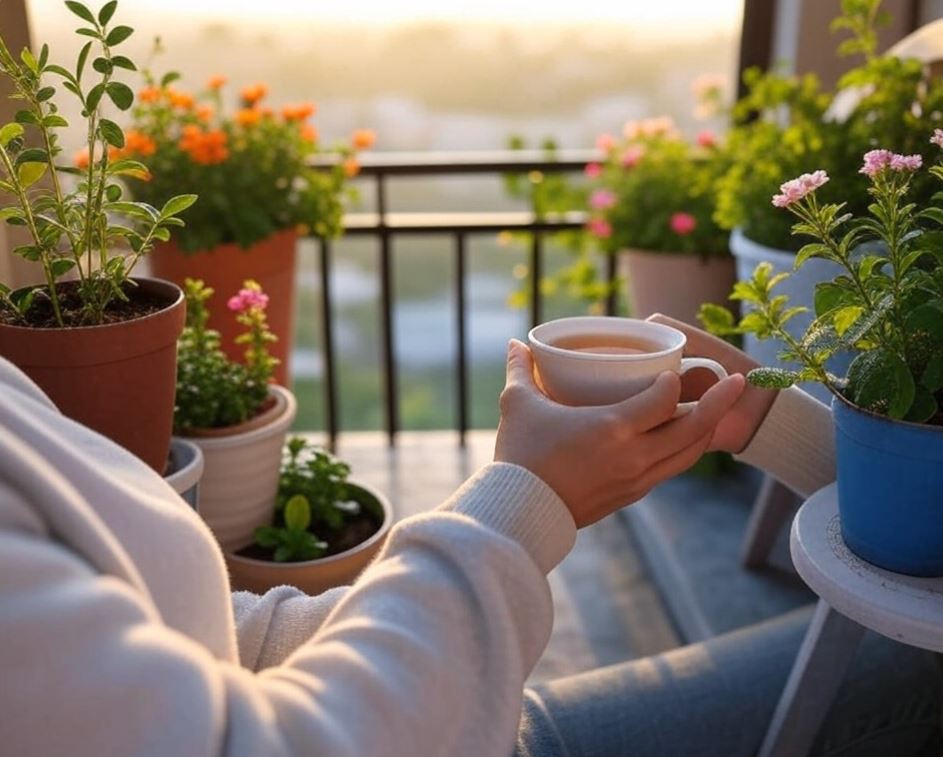
The first time I stepped onto my tiny balcony with a cup of tea in hand, I had no idea I was about to embark on a journey that would transform my mornings and my life. My gardening knowledge was nonexistent, my confidence even less so. But with a steaming mug of chamomile and a single potted basil plant as my companions, I began to craft what I now call my morning bloom routine. This is the story of how I, a city-dwelling novice, learned to garden, found solace in tea, and built a mindful morning ritual that nurtured both my plants and my soul. Along the way, I discovered practical gardening techniques, the science of tea’s calming effects, and the power of starting each day with intention.

The Seed of an Idea

It all started on a chilly April morning in 2024. I’d just moved into a small apartment in Seattle, where my balcony was a concrete slab barely big enough for a chair. I’d always admired gardeners, those green-thumbed wizards who coaxed roses and tomatoes from the earth, but I assumed it wasn’t for me. I killed every houseplant I’d ever owned, from a stubborn succulent to a finicky fern. Yet, something about that balcony called to me. Maybe it was the way the morning light hit the railing, or maybe I was just craving a connection to nature in my urban life.

One day, while sipping a cup of grocery-store chamomile tea, I spotted a wilted basil plant on clearance at the local market. It was $2, and I figured, Why not? I brought it home, set it on the balcony, and stared at it, clueless. That evening, I googled “how to care for basil” and stumbled across a blog post from the Royal Horticultural Society (source). It suggested watering sparingly and pinching back leaves to encourage growth. I was intrigued. Could I, a plant-killing amateur, actually grow something?

The next morning, I brewed another cup of chamomile, stepped onto the balcony, and gave the basil a tentative splash of water. As I sipped my tea, I noticed how the warm mug grounded me, how the steam curled in the cool air. That moment felt like a ritual in the making, a blend of tea, gardening, and quiet reflection. I decided to make it a daily habit.

Trial, Error, and a Teapot

My early gardening attempts were a comedy of errors. I overwatered the basil until its leaves yellowed, then underwatered it in a panic, leaving the soil bone-dry. I learned the hard way that plants need balance, much like life. A quick search led me to a guide on proper watering techniques, which emphasised checking soil moisture with a finger and watering in the morning to reduce evaporation (source). Armed with this knowledge, I adjusted my approach, and the basil began to perk up.

Tea became my anchor during these early lessons. I upgraded from chamomile to green tea after reading about its L-theanine content, which promotes calm focus (source). Each morning, I’d brew a pot of sencha, carry it to the balcony, and sip while inspecting my basil. The ritual gave me patience, helping me slow down and observe rather than rush to “fix” the plant. I started pinching back the basil’s tips, as the RHS suggested, and was thrilled when new leaves sprouted, bushy and fragrant.

Encouraged, I expanded my garden. I bought a cherry tomato seedling and a pot of lavender, drawn to their promise of flavour and fragrance. But with new plants came new challenges. The tomato needed more sunlight than my shady balcony provided, and the lavender suffered from my overzealous watering. I dove into research, learning about plant-specific needs. For instance, tomatoes thrive in at least six hours of direct sun, while lavender prefers well-drained soil and occasional neglect (source). I rearranged my pots to maximize light and invested in a gritty soil mix for the lavender.

Building the Morning Bloom Routine

By summer, my balcony was a modest jungle, basil, tomatoes, lavender, and a new mint plant I’d added for homemade tea. My mornings had evolved into a structured routine, which I dubbed my morning bloom routine. Here’s how it unfolded:

Brewing the Tea
I’d start by boiling water for tea, choosing a blend to match my mood. Green tea for focus, mint for freshness, or chamomile for calm. I learned to steep properly, 1-3 minutes for green tea at 175°F to avoid bitterness (source). Holding the warm mug, I’d take a moment to breathe deeply, a simple mindfulness trick I picked up from a Harvard Health article (source).

Tending the Garden

Next, I’d step onto the balcony with my tea and a small basket of tools, a trowel, pruning shears, and gloves. My tasks were light and intentional:

Watering: I’d check each pot’s soil, watering only those that felt dry. Morning watering became my mantra, as it helped plants absorb moisture before the day’s heat.

Weeding: Tiny weeds occasionally sprouted in my pots, so I’d pull them by hand, savouring the tactile connection to the earth.

Pruning and Deadheading: I’d snip yellowed leaves from the tomato or pinch back mint to keep it bushy. Deadheading lavender blooms encouraged new flowers, a tip I gleaned from Better Homes & Gardens (source).

Observing and Reflecting

After tending the plants, I’d sit with my tea, watching the garden. I noticed details, the way tomato flowers curled, the scent of lavender in the breeze, the hum of a passing bee.

These moments were meditative, grounding me in the present. I started a small notebook, jotting down observations like “tomato needs more fertiliser” or “mint smells amazing today.” This practice deepened my connection to the plants and tracked my progress.

The Science and Soul of Gardening

As my routine solidified, I began to understand why it felt so transformative. Gardening, I learned, isn’t just about plants; it’s about mental and physical health. A 2017 study in Preventive Medicine Reports found that gardening reduces cortisol levels and boosts mood (source). The act of nurturing plants gave me a sense of purpose, while the physical tasks, digging, pruning, and watering, kept me active.

Tea amplified this effect. The L-theanine in green tea and the soothing ritual of brewing chamomile helped me stay calm and focused, countering the stress of city life. I also discovered that growing my own mint for tea created a beautiful loop; my garden nourished me as I nourished it.

Mindfulness was the glue that held it all together. By engaging my senses, feeling the soil, smelling the herbs, and listening to the birds, I turned routine tasks into a meditation. I learned to approach gardening with curiosity rather than perfectionism, a mindset that spilt into other areas of my life.

Adapting to the Seasons

As fall arrived, I faced new challenges. The days grew shorter, and my balcony lost its morning sun. My tomatoes stopped producing, and the basil wilted in the cooler air. At first, I was discouraged, but I learned that gardening is a seasonal dance. A guide from The Old Farmer’s Almanack taught me to shift my focus (source). I harvested the last of my herbs, drying mint and basil for winter teas. I planted pansies, which thrive in cooler weather, and moved my lavender indoors to protect it from frost.

Winter tested my commitment. With less to do outdoors, I turned to indoor gardening, starting a windowsill herb garden with chives and parsley. I sipped cosy teas like rooibos, which warmed me as I misted my plants. By spring 2025, I was ready to expand, adding a trellis for climbing snap peas and a pot of marigolds for colour. Each season taught me resilience and adaptability, lessons I carried into my morning routine.

Lessons from the Garden

Looking back, my morning bloom routine taught me more than how to grow plants. It showed me the value of small, consistent actions, how a few minutes of watering or pruning could yield a thriving garden. It taught me patience, as plants grew on their own timeline, not mine. And it revealed the power of mindfulness, how a cup of tea and a quiet moment could transform a hectic morning into a sanctuary.

For anyone hesitant to start gardening, my story is proof that you don’t need a big space or expertise. A single pot, a cup of tea, and a willingness to learn are enough. Start small, embrace mistakes, and let the garden teach you. As for me, I’m still on my balcony each morning, tea in hand, tending my plants and my peace.

My morning bloom routine is now a cornerstone of my life, a ritual that grounds me in nature and intention. From that first wilted basil to a balcony bursting with herbs, flowers, and vegetables, I’ve grown alongside my garden. The tea, the tools, the quiet moments, they’re all part of a practice that nurtures both the earth and my spirit.
If you’re reading this, I invite you to try it. Grab a plant, brew a cup of tea, and step outside. Your morning bloom routine is waiting to take root, ready to blossom into something beautiful.

Flower Anatomy: A Beginner’s Guide to Understanding Flowers

Flowers are beautiful and fascinating parts of plants, but they’re more than just pretty decorations. They’re the key to how most plants reproduce, creating seeds that grow into new plants. Think of a flower as a specialized factory designed to make sure plants can pass on their genes.

To do this, flowers have different parts, each with a specific job. This essay will explain flower anatomy in simple terms, breaking down the main parts, what they do, and why they matter. Whether you’re curious about the roses in your garden or the daisies in a field, this guide will help you understand how flowers work.

What Is a Flower?

A flower is a part of a plant that helps it reproduce. Most plants that produce flowers are called angiosperms, or flowering plants, and they include everything from sunflowers to apple trees. Flowers are usually found at the end of a stem, and they’re made up of several parts that work together.

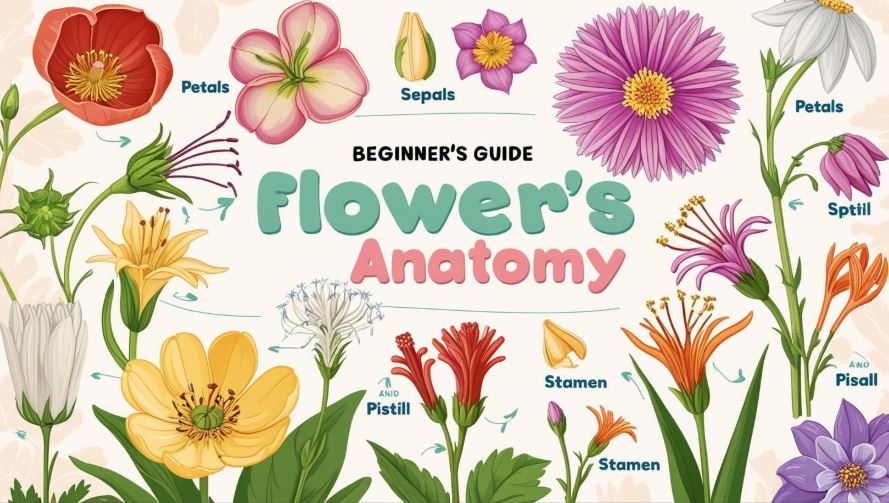
These parts are arranged in layers, like rings, around a central point called the receptacle, which is the base of the flower. The four main layers are the sepals, petals, stamens, and pistils. Some flowers have all these parts (called complete flowers), while others might be missing one or more (called incomplete flowers).

Flowers come in all shapes, sizes, and colors because they’ve evolved to attract animals like bees, birds, or even bats to help with reproduction. This process is called pollination, where pollen (a powdery substance) moves from one flower to another to start making seeds. Let’s explore each part of a flower to see how it helps the plant.

The Outer Parts: Sepals and Petals

Sepals

Imagine a flower bud that hasn’t opened yet. The sepals are the tough, green outer layer that protects it, like a cozy blanket. Sepals are usually leaf-like and form a ring called the calyx around the flower bud. Their job is to shield the delicate inner parts from things like bugs, rain, or harsh sunlight while the flower is still developing.

Once the flower blooms, sepals often stay at the base, looking like small green leaves under the petals. In some plants, like roses, sepals are thick and sturdy. In others, like lilies, they can look colourful and almost like petals. The number of sepals depends on the plant some have three, others have five or more. After the flower opens, sepals might fall off, stay in place, or even help form part of a fruit, like in apples.

Petals

The petals are the colourful, eye-catching part of a flower that we often notice first. They form a ring called the corolla, just inside the sepals. Petals are like billboards advertising the flower to pollinators like bees or butterflies. Their bright colours (red, yellow, purple, etc.), sweet smells, or even patterns we can’t see (like UV markings for bees) are designed to say, “Come here!”

Petals can be soft and delicate, and their shape varies a lot. For example, sunflowers have wide, flat petals that act like a landing pad for bees, while tube-shaped petals in flowers like honeysuckle are perfect for hummingbirds with long beaks. Some flowers, like grasses, don’t need pollinators and have tiny or no petals because they rely on wind to carry pollen. In certain plants, petals and sepals look so similar that they’re called tepals, like in tulips.

The Reproductive Parts: Stamens and Pistils

The sepals and petals are important, but the real action happens in the flower’s reproductive parts: the stamens (male parts) and the pistils (female parts). These are the parts that make pollen and create seeds.

Stamens

The stamens are the male parts of the flower, and they produce pollen, which is like the plant’s version of sperm. A group of stamens is called the androecium. Each stamen has two main parts:
Filament: This is a thin stalk, like a tiny pole, that holds up the pollen-making part.

Anther: At the top of the filament, the anther is a small sac where pollen is made. Inside the anther, special cells split to create tiny pollen grains, each carrying the male reproductive cells.

When the anther is ready, it opens up to release pollen. This might happen when a bee lands on the flower and shakes the pollen out, or the wind might blow it away. Different flowers have different numbers of stamens some, like roses, have lots, while others, like orchids, might have just one or two. In some flowers, stamens can even look like petals to help attract pollinators, but they don’t make pollen.

Pistils

The pistil is the female part of the flower, often found right in the centre. A group of pistils is called the gynoecium. A pistil has three parts:
Stigma: This is the sticky or feathery top where pollen lands. It’s designed to catch pollen, whether it’s carried by a bee or blown by the wind.

Style: The style is a long, thin tube that connects the stigma to the ovary. It holds the stigma up high so it can grab pollen easily.

Ovary: The ovary is the swollen base of the pistil, like a little container. Inside are ovules, which are like plant eggs. After pollen reaches the ovules, they can turn into seeds.

Some flowers have one pistil, while others have several. The ovary’s position also varies it might sit above the other parts (called a superior ovary, like in lilies) or below them (an inferior ovary, like in apples). After pollination, the ovary often grows into a fruit, like a tomato or an orange, with the seeds inside.

How Flowers Work: Pollination and Seed-Making

Now that we know the parts, let’s see how they work together. The goal of a flower is to get pollen from the stamen of one flower to the stigma of another (or sometimes the same flower). This is called pollination. Here’s how it happens:

Pollen Release: The anther opens, and pollen is picked up by a pollinator (like a bee) or carried by wind or water.

Pollen Landing: The pollen lands on the stigma of another flower. The stigma’s sticky or feathery surface grabs it.

Fertilization: The pollen grain grows a tiny tube down through the style to the ovary. Inside the ovary, the pollen’s male cells join with the ovule’s female cells. This is called fertilization.

Seed and Fruit Development: The fertilized ovule turns into a seed, and the ovary often grows into a fruit to protect the seeds.

Flowers are super smart about this process. For example, some have bright petals to attract bees, while others bloom at night with white petals to draw moths. Wind-pollinated flowers, like those on corn, don’t need fancy petals they make lots of pollen and have big, feathery stigmas to catch it.

Extra Flower Features

Some flowers have bonus parts that make them even more interesting:

Receptacle: This is the base where all the flower parts attach. In strawberries, the receptacle becomes the juicy part we eat.

Nectaries: These are glands that make sweet nectar, a treat for pollinators. They’re often at the base of petals.

Bracts: These are special leaves under the flower. In poinsettias, the red “petals” are actually bracts, and the real flowers are tiny.

Why Flower Anatomy Matters

Flowers aren’t just pretty they’re vital to life. They help plants make seeds, which grow into new plants, from crops like wheat to trees like oaks.

Flowers also support animals like bees and butterflies, which rely on nectar and pollen for food. About 80% of the food we eat, like fruits, vegetables, and grains, depends on flowers and their pollinators. Without flowers, our world would be hungrier and less colourful.

Flowers also show how plants adapt to their environment. For example, desert flowers might have small petals to save water, while tropical flowers are big and bright to attract birds. Some flowers, like orchids, have super-specialized parts to work with just one type of pollinator. Others, like dandelions, pack many tiny flowers into one head to look like a big flower.

Different Kinds of Flowers

Not all flowers follow the same pattern. Some plants have separate male and female flowers (monoecious plants, like corn) or even separate male and female plants (dioecious, like holly). Some flowers don’t open at all and pollinate themselves, which is handy in tough conditions. Others, like sunflowers, are actually made of hundreds of tiny flowers working together.

Wrapping It Up

Flowers are like tiny, beautiful machines with parts that work together to help plants reproduce. Sepals protect the bud, petals attract pollinators, stamens make pollen, and pistils create seeds.

Each part has a job, and together they ensure plants can keep growing, feeding animals, and beautifying the world. Next time you see a flower, take a closer look you’ll see a masterpiece of nature that’s been perfected over millions of years. Understanding flower anatomy helps us appreciate how important plants are to our lives and the planet.