

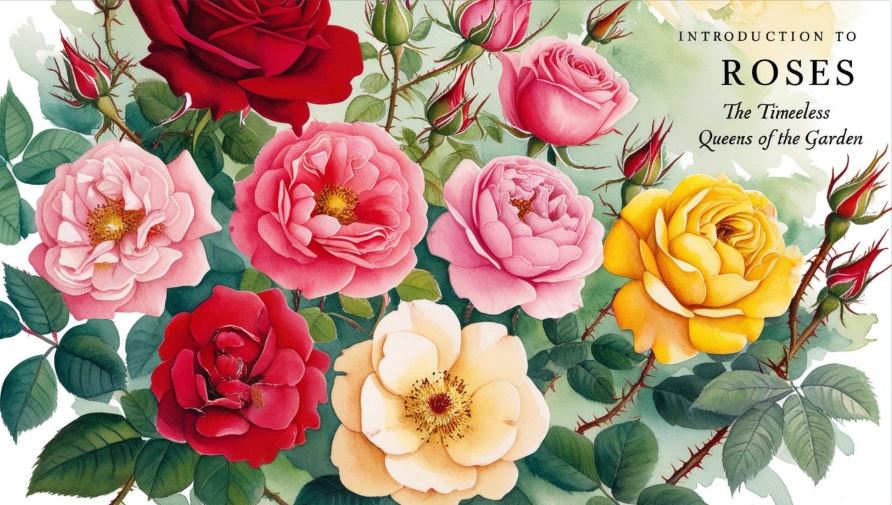
Introduction to Roses: The Timeless Queens of the Garden

Roses. The very word conjures images of romance, elegance, and vibrant garden displays. Known as the “Queen of Flowers,” roses have captivated hearts for centuries, from ancient Persian gardens to modern backyard plots. For beginner gardeners, roses might seem intimidating, don’t they seem fussy and hard to grow? Spoiler alert: they’re not as high-maintenance as you might think! With a little know-how, anyone can cultivate these iconic blooms. Whether you’re dreaming of a fragrant rose hedge, a single potted beauty, or a bouquet to gift a loved one, this guide will introduce you to the world of roses, their dazzling diversity, and how to make them thrive. Let’s dig in and discover why roses are a must-have for every garden.

What Makes Roses So Special?

Roses belong to the Rosa genus, which includes over 300 species and thousands of cultivars. Their signature features are those lush, layered petals that unfurl into blooms ranging from tiny and delicate to large and showy. Roses come in nearly every colour imaginable, classic reds, soft pinks, sunny yellows, crisp whites, and even quirky purples, blues, and greens in modern hybrids. Their fragrances are just as varied, from sweet and spicy to citrusy or musky, making them a sensory delight.

Beyond their beauty, roses are steeped in history and symbolism. In ancient Rome, they were symbols of love and secrecy (hence “sub rosa”). In medieval Europe, monasteries grew them for medicinal purposes. Today, they’re the go-to flower for weddings, anniversaries, and apologies (because who can resist a red rose?). For gardeners, roses offer versatility: they can climb trellises, form tidy shrubs, or thrive in containers. There’s a rose for every space, style, and skill level.

Types of Roses to Know

Roses are grouped into several types, each with unique traits. Here’s a quick rundown for beginners:
🌹Hybrid Tea Roses: The classic long-stemmed roses you see in florist shops. They produce large, elegant blooms, often one per stem, in colours like red (‘Mister Lincoln’) or peach (‘Just Joey’). Perfect for cutting gardens.

🌹Floribunda Roses: These are bushier and bloom in clusters, offering a riot of colour. Try ‘Iceberg’ for white blooms or ‘Julia Child’ for buttery yellow. Great for borders.

🌹Grandiflora Roses: A cross between hybrid teas and floribundas, they combine tall stems with clustered blooms. ‘Queen Elizabeth’ is a pink favorite.

🌹Climbing Roses: These vigorous growers scale walls or arbours. ‘New Dawn’ offers soft pink blooms and repeat flowering.

🌹Shrub Roses: Low-maintenance and disease-resistant, like the Knock Out series, which blooms tirelessly in red, pink, or yellow. Ideal for beginners.

🌹Miniature Roses: Tiny but mighty, these are perfect for pots or small gardens. ‘Baby Boomer’ is a cheerful pink option.

Each type has its charm, so your choice depends on your garden’s space and aesthetic. Want a romantic vibe? Go for climbers. Need low-effort colour? Shrub roses are your friends.

Popular Uses for Roses

Roses are the ultimate multitaskers. In gardens, they create focal points—think a rose-covered arch or a vibrant border. They’re also stars in cut-flower arrangements, lasting up to two weeks in a vase with proper care. Rose petals are edible and can garnish desserts or steeped in teas (just ensure they’re pesticide-free). Some roses, like Rosa rugosa, produce hips (seed pods) rich in vitamin C, used in jams or herbal remedies. And let’s not forget their role in perfumery, rose oil is a cornerstone of luxury fragrances.

COLOURS and Their Meanings

🌹Roses speak a language of colour:

Red: Passion and love (think Valentine’s Day).
White: Purity and new beginnings, often used in weddings.
Pink: Gratitude and affection, a sweet gesture for friends.
Yellow: Friendship and joy, perfect for cheering someone up.
Orange: Enthusiasm and energy, a bold choice for modern gardens.
Lavender/Purple: Enchantment and uniqueness, for those who dare to be different.

Mixing colours in a garden bed can create a stunning visual story, while single-color displays offer timeless elegance.

Growing Tips for Beginners

Roses love sunshine, so choose a spot with at least six hours of direct light daily. Well-drained soil is key; soggy roots spell trouble. Here’s how to get started:

🌹Planting: Spring or fall is ideal. Dig a hole twice as wide as the root ball, mix in compost, and plant so the graft union (the knobby bit) is just above soil level in mild climates or slightly below in cold ones.

🌹Watering: Water deeply but infrequently, about once a week, aiming at the base to keep leaves dry.

🌹Feeding: Use a balanced fertiliser (like 10-10-10) monthly during the growing season.

🌹Pruning: In early spring, cut back dead or weak stems and shape the plant to encourage airflow. Don’t stress—roses are forgiving!

🌹Pests and Diseases: Watch for aphids (spray with soapy water) and black spot (remove affected leaves and ensure good air circulation). Disease-resistant varieties like Knock Outs simplify care.

Container roses are great for patios; just choose a large pot and water more frequently. Mulching with bark or compost keeps roots cool and weeds at bay.

Why Grow Roses?

Roses reward you with months of blooms, often from spring to frost in milder climates. They attract pollinators like bees and butterflies, boosting your garden’s ecosystem. Plus, there’s something deeply satisfying about nurturing a plant with such a storied past. Imagine snipping your own roses for a vase or watching a climber transform a bare fence into a floral masterpiece. For beginners, roses teach patience and resilience; every bloom feels like a victory.

Fun Facts to Spark Curiosity

The oldest living rose bush, in Hildesheim, Germany, is over 1,000 years old and still blooms!
Roses are related to apples, almonds, and cherries—all part of the Rosaceae family.
The world’s most expensive rose, the ‘Juliet’ by David Austin, took 15 years and $5 million to develop.

Roses aren’t just flowers; they’re a journey. From their rich history to their endless varieties, they offer something for every gardener. Start small, maybe with a hardy shrub rose, and let its beauty inspire you. With a bit of sun, love, and care, your roses will bloom like royalty, transforming your garden into a haven of colour and scent. Ready to plant your first rose? Your garden’s new queen is waiting.

Petals Through Time: How Flowers Shaped Cultures and Symbolism Across the Ages.

Petels through time

In the grand tapestry of human existence, few threads shimmer as vibrantly as the history of flowers. These delicate emissaries of nature have woven themselves into our rituals, art, and affections, their petals whispering tales of ancient empires and modern marvels. From the lotus-crowned altars of Egypt to the rose-strewn sonnets of Shakespeare, the meaning of flowers throughout history transcends borders and eras, uniting humanity in a shared reverence for beauty.

At FlowerAndGrow.com, we celebrate this legacy, tracing the cultural importance of flowers through their roles in medicine, mythology, and mastery of cultivation. Join us on a 2000-year odyssey to uncover the ancient uses of flowers, their symbolic splendour, and the evolution of flower gardening, as we cultivate not just blooms but an enduring appreciation for nature’s finest artistry.

Flowers in Ancient Civilisations

The history of flowers begins in the cradle of civilisation, where blooms were more than mere ornaments; they were sacred, medicinal, and profound. In ancient Egypt, the lotus flower reigned supreme, its petals unfurling at dawn to symbolise rebirth and purity. Pharaohs were buried with garlands of lotus and papyrus, ensuring their passage to the afterlife, a testament to the ancient uses of flowers in rituals.

In Mesopotamia, saffron crocuses were prized for their golden stigmas, used in dyes and remedies, while cuneiform tablets record offerings of blooms to deities. Across the Mediterranean, the Greeks and Romans adorned their feasts and temples with roses and violets. The Greeks crowned victors with laurel wreaths, and myths like that of Adonis, born from a myrrh tree, reveal the symbolic flowers in different cultures. In Rome, floral garlands signified status, and the flowers used in ancient medicine included chamomile for calming and rosewater for skin ailments. Further east, India’s Vedic texts praised jasmine for its divine fragrance, used in worship, while China’s peony, the “king of flowers,” symbolised prosperity in early art. These civilisations laid the roots for the cultural importance of flowers, entwining them with human aspiration and reverence.

The Symbolism of Flowers Across Cultures

As civilisations flourished, so did the traditional flower symbolism that imbued blooms with meaning. In ancient India, the marigold’s fiery hues adorned Hindu ceremonies, symbolising auspiciousness and devotion. The lotus, revered in Buddhism, represented enlightenment, its pristine petals rising unsullied from muddy waters. In Christianity, the rose became a symbol of the Virgin Mary, its thorns evoking Christ’s suffering, while lilies signified purity in religious iconography.

The symbolic flowers in different cultures also shaped secular traditions.
In Persia, the tulip symbolised love and sacrifice, its vivid petals inspiring poetry. Japan’s cherry blossoms, or sakura, embodied the fleeting nature of life, celebrated in hanami festivals. Even in Mesoamerica, the Aztecs revered the marigold (cempasúchil) as a guide for souls during Día de los Muertos, a tradition that endures. These meanings, rooted in myth and faith, reveal the cultural importance of flowers as vessels of human emotion, bridging the divine and the earthly with their ephemeral beauty.

Flowers in Art, Literature, and Religion

The history of flowers blooms vividly in the realm of art and literature, where they served as muses and metaphors. In medieval Europe, illuminated manuscripts glowed with floral borders roses, lilies, and violets symbolising virtues in religious texts. The flowers in art and religion found further expression in tapestries, where woven blooms adorned noble halls. By the Renaissance, artists like Botticelli painted flora with allegorical precision, as seen in Primavera, where flowers crown the goddess of spring.

In literature, flowers spoke where words faltered. Shakespeare’s Ophelia wove garlands of daisies and rosemary, each bloom laden with meaning, while Persian poet Hafiz likened the rose to divine beauty. The meaning of flowers through history also inspired Japan’s ikebana, the art of flower arrangement, which elevated blooms to spiritual meditation. In the 19th century, Impressionists like Monet and Van Gogh immortalised gardens, their canvases bursting with sunflowers and water lilies that captured nature’s fleeting splendour. These works underscore the cultural importance of flowers, transforming petals into timeless expressions of human longing and reverence.

The Rise of Flower Gardening

The evolution of flower gardening marks a pivotal chapter in the history of flowers, as humans sought to tame nature’s beauty. In medieval Europe, monastic gardens cultivated roses and lavender for medicinal and liturgical use, their orderly beds reflecting divine harmony. By the Renaissance, Italian villas boasted geometric parterres, showcasing the history of flower cultivation as a status symbol. The 17th-century Dutch Golden Age, however, redefined floral fervour with “tulip mania,” when a single bulb fetched fortunes, cementing tulips as emblems of wealth and obsession.

The evolution of flower gardening reached new heights in the Victorian era, when “the language of flowers” assigned meanings to every bloom, red roses for love, forget-me-nots for remembrance. English cottage gardens, brimming with peonies and hollyhocks, celebrated romantic abundance, while French formal gardens at Versailles imposed regal symmetry. These trends, fueled by global exploration and plant exchanges, introduced exotic species like dahlias from Mexico and chrysanthemums from Asia, enriching the history of flower cultivation. By the 19th century, gardening had become a cultural pursuit, democratising beauty across classes and continents.

Flowers in Modern Times

Today, the history of flowers continues to evolve, shaped by commerce, creativity, and conscience. The global flower industry, valued at billions, fuels floristry, with roses, tulips, and orchids dominating markets from Colombia to the Netherlands. Modern florists craft arrangements for weddings, funerals, and celebrations, perpetuating the traditional flower symbolism of love, grief, and joy. Yet, the cultural importance of flowers persists beyond commerce, in Japan, cherry blossom festivals draw millions, while in India, marigolds still grace festivals like Diwali.

The history of flower cultivation now embraces sustainability, as growers adopt eco-friendly practices to combat environmental impact. Urban gardening and pollinator-friendly blooms like lavender and bee balm reflect a renewed commitment to nature, aligning with FlowerAndGrow.com’s mission to nurture growth. Technology, too, plays a role, with apps guiding gardeners and hybrid blooms engineered for resilience. Yet, the essence of flowers, their ability to console, inspire, and unite, remains unchanged, a testament to their enduring allure.

To trace the history of flowers is to wander through humanity’s heart, where each bloom tells a story of reverence, ingenuity, and beauty. From the ancient uses of flowers in Egypt’s tombs to the symbolic flowers in different cultures like Japan’s sakura, flowers have shaped our rituals, art, and gardens. The evolution of flower gardening, from monastic plots to modern eco-conscious beds, reflects our desire to cultivate not just blooms but meaning. At FlowerAndGrow.com, we believe understanding this legacy deepens our bond with nature, inspiring us to grow gardens that echo the past while blooming toward a sustainable future. Let us plant, tend, and marvel, for in every flower lies a timeless legacy, as eternal as the human spirit.