

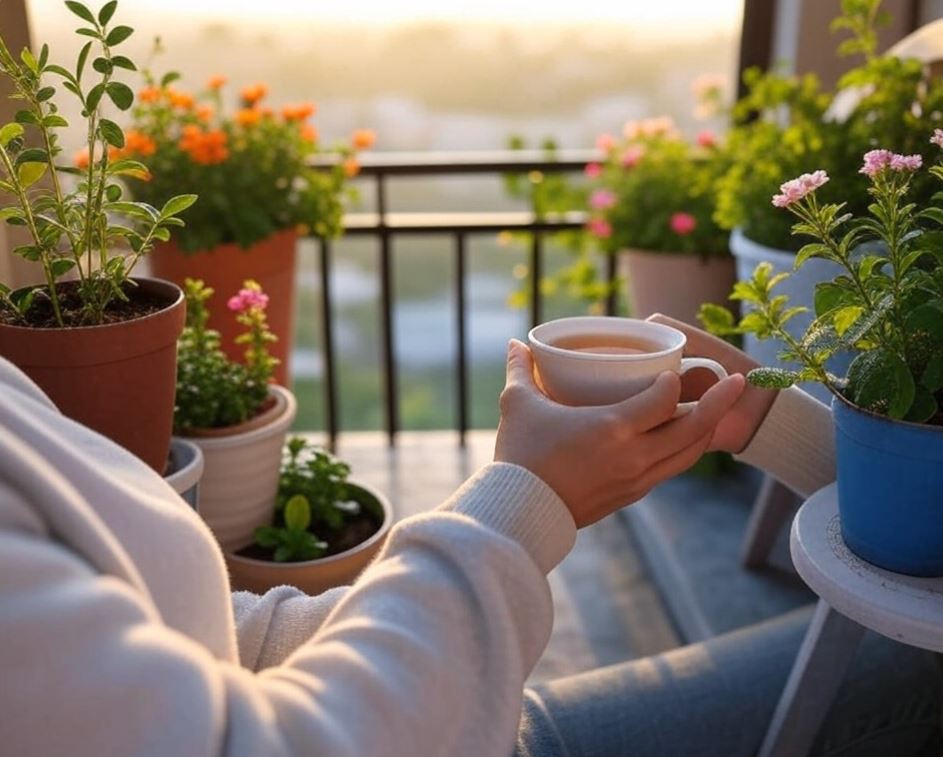
The first time I stepped onto my tiny balcony with a cup of tea in hand, I had no idea I was about to embark on a journey that would transform my mornings and my life. My gardening knowledge was nonexistent, my confidence even less so. But with a steaming mug of chamomile and a single potted basil plant as my companions, I began to craft what I now call my morning bloom routine. This is the story of how I, a city-dwelling novice, learned to garden, found solace in tea, and built a mindful morning ritual that nurtured both my plants and my soul. Along the way, I discovered practical gardening techniques, the science of tea’s calming effects, and the power of starting each day with intention.
The Seed of an Idea
It all started on a chilly April morning in 2024. I’d just moved into a small apartment in Seattle, where my balcony was a concrete slab barely big enough for a chair. I’d always admired gardeners, those green-thumbed wizards who coaxed roses and tomatoes from the earth, but I assumed it wasn’t for me. I killed every houseplant I’d ever owned, from a stubborn succulent to a finicky fern. Yet, something about that balcony called to me. Maybe it was the way the morning light hit the railing, or maybe I was just craving a connection to nature in my urban life.
One day, while sipping a cup of grocery-store chamomile tea, I spotted a wilted basil plant on clearance at the local market. It was $2, and I figured, Why not? I brought it home, set it on the balcony, and stared at it, clueless. That evening, I googled “how to care for basil” and stumbled across a blog post from the Royal Horticultural Society (source). It suggested watering sparingly and pinching back leaves to encourage growth. I was intrigued. Could I, a plant-killing amateur, actually grow something?
The next morning, I brewed another cup of chamomile, stepped onto the balcony, and gave the basil a tentative splash of water. As I sipped my tea, I noticed how the warm mug grounded me, how the steam curled in the cool air. That moment felt like a ritual in the making, a blend of tea, gardening, and quiet reflection. I decided to make it a daily habit.
Trial, Error, and a Teapot
My early gardening attempts were a comedy of errors. I overwatered the basil until its leaves yellowed, then underwatered it in a panic, leaving the soil bone-dry. I learned the hard way that plants need balance, much like life. A quick search led me to a guide on proper watering techniques, which emphasised checking soil moisture with a finger and watering in the morning to reduce evaporation (source). Armed with this knowledge, I adjusted my approach, and the basil began to perk up.
Tea became my anchor during these early lessons. I upgraded from chamomile to green tea after reading about its L-theanine content, which promotes calm focus (source). Each morning, I’d brew a pot of sencha, carry it to the balcony, and sip while inspecting my basil. The ritual gave me patience, helping me slow down and observe rather than rush to “fix” the plant. I started pinching back the basil’s tips, as the RHS suggested, and was thrilled when new leaves sprouted, bushy and fragrant.
Encouraged, I expanded my garden. I bought a cherry tomato seedling and a pot of lavender, drawn to their promise of flavour and fragrance. But with new plants came new challenges. The tomato needed more sunlight than my shady balcony provided, and the lavender suffered from my overzealous watering. I dove into research, learning about plant-specific needs. For instance, tomatoes thrive in at least six hours of direct sun, while lavender prefers well-drained soil and occasional neglect (source). I rearranged my pots to maximize light and invested in a gritty soil mix for the lavender.
Building the Morning Bloom Routine
By summer, my balcony was a modest jungle, basil, tomatoes, lavender, and a new mint plant I’d added for homemade tea. My mornings had evolved into a structured routine, which I dubbed my morning bloom routine. Here’s how it unfolded:
Brewing the Tea
I’d start by boiling water for tea, choosing a blend to match my mood. Green tea for focus, mint for freshness, or chamomile for calm. I learned to steep properly, 1-3 minutes for green tea at 175°F to avoid bitterness (source). Holding the warm mug, I’d take a moment to breathe deeply, a simple mindfulness trick I picked up from a Harvard Health article (source).
Tending the Garden
Next, I’d step onto the balcony with my tea and a small basket of tools, a trowel, pruning shears, and gloves. My tasks were light and intentional:
Watering: I’d check each pot’s soil, watering only those that felt dry. Morning watering became my mantra, as it helped plants absorb moisture before the day’s heat.
Weeding: Tiny weeds occasionally sprouted in my pots, so I’d pull them by hand, savouring the tactile connection to the earth.
Pruning and Deadheading: I’d snip yellowed leaves from the tomato or pinch back mint to keep it bushy. Deadheading lavender blooms encouraged new flowers, a tip I gleaned from Better Homes & Gardens (source).
Observing and Reflecting
After tending the plants, I’d sit with my tea, watching the garden. I noticed details, the way tomato flowers curled, the scent of lavender in the breeze, the hum of a passing bee.
These moments were meditative, grounding me in the present. I started a small notebook, jotting down observations like “tomato needs more fertiliser” or “mint smells amazing today.” This practice deepened my connection to the plants and tracked my progress.
The Science and Soul of Gardening
As my routine solidified, I began to understand why it felt so transformative. Gardening, I learned, isn’t just about plants; it’s about mental and physical health. A 2017 study in Preventive Medicine Reports found that gardening reduces cortisol levels and boosts mood (source). The act of nurturing plants gave me a sense of purpose, while the physical tasks, digging, pruning, and watering, kept me active.
Tea amplified this effect. The L-theanine in green tea and the soothing ritual of brewing chamomile helped me stay calm and focused, countering the stress of city life. I also discovered that growing my own mint for tea created a beautiful loop; my garden nourished me as I nourished it.
Mindfulness was the glue that held it all together. By engaging my senses, feeling the soil, smelling the herbs, and listening to the birds, I turned routine tasks into a meditation. I learned to approach gardening with curiosity rather than perfectionism, a mindset that spilt into other areas of my life.
Adapting to the Seasons
As fall arrived, I faced new challenges. The days grew shorter, and my balcony lost its morning sun. My tomatoes stopped producing, and the basil wilted in the cooler air. At first, I was discouraged, but I learned that gardening is a seasonal dance. A guide from The Old Farmer’s Almanack taught me to shift my focus (source). I harvested the last of my herbs, drying mint and basil for winter teas. I planted pansies, which thrive in cooler weather, and moved my lavender indoors to protect it from frost.
Winter tested my commitment. With less to do outdoors, I turned to indoor gardening, starting a windowsill herb garden with chives and parsley. I sipped cosy teas like rooibos, which warmed me as I misted my plants. By spring 2025, I was ready to expand, adding a trellis for climbing snap peas and a pot of marigolds for colour. Each season taught me resilience and adaptability, lessons I carried into my morning routine.
Lessons from the Garden
Looking back, my morning bloom routine taught me more than how to grow plants. It showed me the value of small, consistent actions, how a few minutes of watering or pruning could yield a thriving garden. It taught me patience, as plants grew on their own timeline, not mine. And it revealed the power of mindfulness, how a cup of tea and a quiet moment could transform a hectic morning into a sanctuary.
For anyone hesitant to start gardening, my story is proof that you don’t need a big space or expertise. A single pot, a cup of tea, and a willingness to learn are enough. Start small, embrace mistakes, and let the garden teach you. As for me, I’m still on my balcony each morning, tea in hand, tending my plants and my peace.
My morning bloom routine is now a cornerstone of my life, a ritual that grounds me in nature and intention. From that first wilted basil to a balcony bursting with herbs, flowers, and vegetables, I’ve grown alongside my garden. The tea, the tools, the quiet moments, they’re all part of a practice that nurtures both the earth and my spirit.
If you’re reading this, I invite you to try it. Grab a plant, brew a cup of tea, and step outside. Your morning bloom routine is waiting to take root, ready to blossom into something beautiful.
 Blossoms & Blooms