Hello, dear plant enthusiasts! It’s your favourite botanist here, thrilled to share with you the magical world of epiphytes—those captivating plants that seem to defy gravity by thriving in the air. With my years of experience growing, maintaining, arranging, and displaying flowers and plants, I’m excited to guide you through the essentials of epiphytes. By the end of this blog, you’ll have a clear and precise understanding of these unique beauties and perhaps even feel inspired to welcome them into your own green spaces. Let’s dive in!
What Are Epiphytes?
Epiphytes are extraordinary plants that grow on other plants, typically trees, without taking nutrients or water from them. Unlike parasites, epiphytes are self-sufficient, using their host merely as a perch to reach sunlight and capture moisture from the air. The term “epiphyte” comes from the Greek words epi (upon) and phyton (plant), perfectly describing their lifestyle of living “upon” others. You’ve likely encountered famous examples like orchids, bromeliads, and certain ferns, stars of the epiphytic world!
Where Do Epiphytes Thrive?
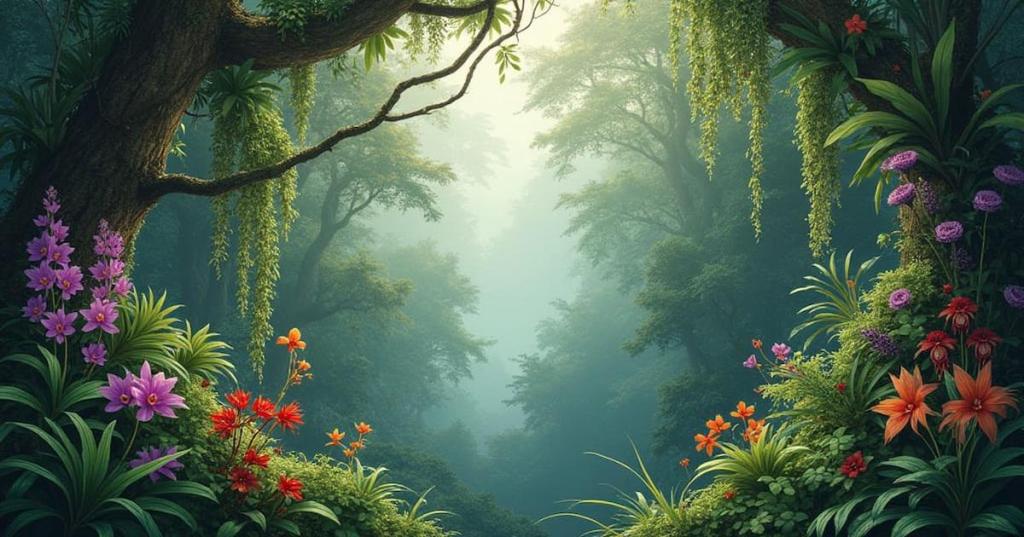
In nature, epiphytes flourish in diverse environments, but they’re most abundant in tropical rainforests, where high humidity, frequent rain, and tall trees create ideal conditions. They cling to branches, trunks, and even rocks, basking in dappled sunlight and sipping moisture from mist, dew, or rainfall. Some, like the Spanish moss draping southern oaks, also appear in temperate regions. Their adaptability is a testament to nature’s ingenuity, and I’ve spent countless hours marvelling at their resilience in the wild and nurturing them in gardens.
How Do Epiphytes Survive?
Epiphytes have evolved remarkable strategies to thrive without soil:
Roots for Anchoring and Absorption: Their roots grip hosts tightly, while specialised structures like aerial roots absorb water and nutrients from the air or trapped debris. Orchids, for instance, have thick, spongy roots that soak up moisture like tiny sponges.
Water Storage: Many epiphytes, such as bromeliads, form rosettes of leaves that create a “tank” to collect rainwater and organic matter. I’ve always found it delightful to peek into these natural cups and see tiny ecosystems at work!
Efficient Nutrient Use: They snatch nutrients from dust, decaying leaves, or even bird droppings, making them masters of resourcefulness.
Popular Epiphytes to Know
Here are a few epiphytes I adore working with and displaying:
Orchids: With their stunning blooms, orchids like Phalaenopsis or Cattleya are epiphytic gems. They’re perfect for beginners, needing just a bark mount and occasional misting.
Bromeliads: Think of the vibrant Tillandsia (air plants) or Guzmania with their colourful bracts. These are a joy to arrange in creative displays—try hanging them in glass orbs!
Ferns: The staghorn fern (Platycerium) with its antler-like fronds is a showstopper. I love mounting them on wooden plaques for a rustic look.
Spanish Moss: This flowing Tillandsia usneoides adds a whimsical touch, draping beautifully over branches or in arrangements.
Growing and Maintaining Epiphytes
Caring for epiphytes is easier than you might think, and I’m here to encourage you to give it a try! Here’s how:
Light: Provide bright, indirect light—mimic the filtered sun of a forest canopy. A north or east-facing window works well indoors.
Water: Mist or soak them weekly, depending on humidity. I often dunk my air plants in water for 10-15 minutes, then shake off excess to prevent rot.
Mounting: Skip soil! Attach them to bark, wood, or moss-covered boards with wire or glue. I’ve had great fun experimenting with driftwood displays.
Humidity: Aim for 50-70% humidity. In dry climates, a humidifier or a pebble tray with water does wonders.
Airflow: Good circulation prevents fungal issues. A gentle fan can replicate the breezy treetops they love.
Arranging and Displaying Epiphytes
Epiphytes are a dream for creative displays! I’ve spent years perfecting arrangements, and here are my favorite tips:
Hanging Gardens: Suspend air plants or orchids in clear containers or macramé hangers for a floating effect.
Living Walls: Mount staghorn ferns and bromeliads on a vertical board for a stunning focal point.
Accents: Tuck Spanish moss into wreaths or around potted plants for texture. I once designed a table centrepiece with moss and orchids—my readers loved it!
Why Epiphytes Matter
Beyond their beauty, epiphytes play a vital role in ecosystems, providing homes for birds, insects, and frogs. They remind us to appreciate nature’s creativity and adaptability. Growing them at home connects you to this magic, and I promise the journey is rewarding. Whether you’re a novice or a seasoned gardener, epiphytes offer endless possibilities to explore and enjoy.
Your Next Step
Ready to embrace epiphytes? Start small with a Tillandsia or a beginner-friendly orchid. Experiment, observe, and don’t be afraid to make mistakes—every plant teaches us something new. I’d love to hear about your adventures, so share your stories and photos with me!
With green thumbs and big dreams, Your Devoted Botanist
Imagine stumbling upon a flower so delicate it seems to float like a butterfly, its petals painted in colours that rival a sunset. This is the magic of an orchid, a plant that feels like a gift from nature’s imagination.
With over 25,000 species, the Orchidaceae family is one of the largest and most diverse groups of flowering plants on Earth, thriving everywhere from steamy rainforests to chilly mountain slopes. Orchids captivate us with their breath taking beauty, their clever survival tricks, and their deep cultural meanings, symbolising love, luxury, beauty, and strength. Whether you’re a gardener, a nature lover, or just curious, orchids have a story to tell.
We’ll journey through their fascinating world, exploring how they grow, their unique features, their cunning pollination strategies, some famous types, and the powerful symbolism that makes them so special. Let’s dive into the enchanting realm of orchids!
Habit and Growth Types
Orchids are like the adventurers of the plant world, thriving in environments as varied as tropical jungles, grassy meadows, and rocky cliffs. They’ve mastered the art of survival, adapting to climates from the humid Amazon to the cool Alps. Unlike many plants that stick to one way of life, orchids have three main growth styles, epiphytic, terrestrial, and lithophytic, each showcasing their incredible versatility.
Epiphytic orchids are the free spirits of the family. They don’t grow in soil but perch on other plants, usually trees, like birds nesting in branches. These “air plants” aren’t parasites; they don’t steal from their hosts. Instead, their roots dangle in the air, soaking up moisture and nutrients from rain, fog, or even dust. Picture a rainforest canopy, where epiphytic orchids cling to tree bark, their vibrant flowers bursting against lush green leaves. Many orchids in tropical regions, like those in Costa Rica, live this treetop life, basking in dappled sunlight.
Terrestrial orchids, on the other hand, prefer to keep their feet on the ground. These orchids grow in soil, their roots anchoring into the earth like most familiar plants. You might find them on forest floors, grasslands, or even temperate meadows. Some terrestrial orchids, like those in Europe’s woodlands, endure cold winters by storing energy in underground tubers, ready to bloom when spring arrives. Their ability to adapt to different soils and climates makes them resilient travellers, popping up in unexpected places.
Then there are lithophytic orchids, the rugged survivors that make rocks their home. These orchids anchor themselves in rocky crevices, their roots sipping moisture from misty air or trickling water. Imagine a cliff in the Andes, where a lithophytic orchid’s bright blooms defy the harsh, stony landscape. Their toughness is inspiring; they thrive where few other plants dare to grow.
Each growth type paints a picture of orchids’ adaptability. Whether they’re swaying in a tree, rooted in a meadow, or clinging to a boulder, orchids show us how to flourish in the wildest corners of the world.
Unique Features: Bilateral Symmetry and the Labellum
What makes an orchid flower so unforgettable? It’s not just the colours or shapes, it’s the way they’re built, like tiny sculptures crafted by nature. Two standout features, bilateral symmetry and the labellum, give orchids their striking look and clever functionality.
Bilateral symmetry means an orchid flower can be split down the middle into two mirror-image halves, much like a human face. Unlike daisies, which have petals radiating evenly in a circle (radial symmetry), orchids have a “left” and “right” side that match perfectly. This gives them a bold, almost animal-like presence, as if they’re gazing back at you. Hold an orchid bloom and turn it sideways, you’ll see how its petals align like a butterfly’s wings, making it instantly eye-catching.
Then there’s the labellum, the orchid’s showstopping petal. Unlike the other petals, the labellum is often larger, brighter, or wildly shaped, acting like a welcome mat for pollinators. Think of it as the flower’s VIP lounge, inviting bees, butterflies, or even birds to land. The labellum comes in endless forms: in Paphiopedilum orchids, it’s a pouch-like “slipper” that traps insects briefly to ensure pollination; in others, it’s fringed, spotted, or flared like a dancer’s skirt. Its colours, hot pink, deep purple, or creamy white, add to the orchid’s allure, making each bloom feel like a work of art.
These features aren’t just for show. Bilateral symmetry helps pollinators zero in on the flower, while the labellum guides them to the nectar. Together, they make orchids not only beautiful but also brilliantly designed, enchanting both humans and insects alike.
Complex Pollination Strategies: Mimicry and Scent
Orchids are the master manipulators of the plant world, using cunning tricks to ensure their flowers are pollinated. Pollination is how orchids reproduce, transferring pollen from one flower to another to create tiny seeds. But orchids don’t leave it to chance; they’ve evolved some of the most complex strategies in nature, relying on mimicry and scent to lure pollinators like bees, moths, or even flies.
Mimicry is one of their sneakiest moves. Some orchids disguise themselves to trick pollinators into visiting. Take the bee orchid (Ophrys), which looks and smells like a female bee. Male bees, thinking they’ve found a mate, land on the flower and try to “court” it, accidentally picking up pollen in the process. When they visit another bee orchid, they transfer the pollen, pollinating the flower. It’s like the orchid is playing a prank, fooling the bee into doing its bidding! Other orchids mimic nectar-rich flowers or even rotting meat to attract flies, ensuring a steady stream of visitors.
Scent is another powerful tool. Orchids use fragrances like a perfumer, crafting smells to match their pollinators’ preferences. Some release sweet, honey-like aromas to draw bees, while others, like certain Bulbophyllum species, emit odours resembling decay to entice flies. Vanilla orchids, for example, produce a subtle, creamy scent that beckons specific bees. These fragrances aren’t random; they’re tailored to the noses of their target pollinators, making orchids expert chemists.
These strategies highlight orchids’ evolutionary genius. Their tiny seeds, like specks of dust, need perfect conditions to grow, so orchids pour their energy into ensuring pollination succeeds. It’s like a high-stakes dance, with orchids as the choreographers, guiding insects through their clever traps and tantalising scents.
Famous Genera: Phalaenopsis, Cattleya, and Vanilla
Among the thousands of orchid types, a few stand out for their beauty, usefulness, or familiarity. Let’s meet three famous genera, Phalaenopsis, Cattleya, and Vanilla, each with its own charm and story.
Phalaenopsis, or moth orchids, are the darlings of the orchid world. Their flowers, shaped like fluttering butterflies, come in shades of white, pink, or yellow and can last for months. These orchids are epiphytes, often grown in pots with bark instead of soil, making them perfect for beginners. You’ve likely seen them in grocery stores or decorating homes, their elegant blooms adding a touch of grace. Phalaenopsis are easy to care for, thriving on a windowsill with indirect light, earning them a spot as the go-to houseplant for orchid lovers.
Cattleya orchids are the glamorous divas, often called the “queen of orchids.” Their large, vibrant flowers, think hot pink, lavender, or white, burst with fragrance and dazzle in floral displays. Cattleyas were once the star of corsages, pinned to dresses for prom or weddings. These epiphytes grow in tropical regions, and their showy blooms demand attention. While they need a bit more care than Phalaenopsis, their stunning beauty makes them worth the effort for orchid enthusiasts.
Vanilla orchids bring a surprising twist; they’re the source of the vanilla flavour we love in ice cream and cookies. Unlike most orchids, Vanilla is a vining plant, climbing trees or trellises with creamy, trumpet-shaped flowers. After pollination, it produces long pods (the “beans”) that are harvested and cured to create vanilla extract. Native to places like Madagascar, Vanilla connects the exotic orchid world to our everyday lives, reminding us how these plants touch us beyond their beauty.
Each genus shines in its own way: Phalaenopsis as the approachable beauty, Cattleya as the dazzling star, and Vanilla as the flavourful surprise, making orchids a family full of variety and wonder.
Symbolism: Love, Luxury, Beauty, and Strength
Orchids aren’t just plants, they’re symbols that carry deep meanings across cultures. Their exquisite flowers and resilient nature have made them emblems of love, luxury, beauty, and strength.
Love and beauty go hand in hand with orchids. Their delicate petals and vibrant colours make them a perfect gift for expressing affection, often seen in wedding bouquets or romantic gestures. In Victorian times, giving someone an orchid was a bold declaration of admiration, and today, they still say “I love you” in a language of petals.
Luxury is another hallmark of orchids. In the 19th century, rare orchids were so prized that collectors paid fortunes to own them, sparking “orchid fever.” Even now, exotic orchids are status symbols in horticulture, gracing upscale events or high-end homes with their elegance.
Strength might surprise you, but orchids earn this title through their grit. Epiphytes cling to trees through storms, lithophytes endure rocky wastelands, and even terrestrial orchids brave harsh winters. This resilience inspires us, showing that beauty can thrive in tough conditions. From ancient Greece, where orchids symbolised fertility, to modern weddings, where they represent enduring love, orchids carry a timeless emotional weight, connecting us to nature and each other.
Ultimately, all things considered.
Orchids are a marvel, blending science, beauty, and meaning into one extraordinary family. From their adventurous growth as epiphytes, terrestrials, or lithophytes, to their stunning bilateral symmetry and clever labellum, orchids captivate with their design. Their pollination tricks, mimicry and scents reveal a playful intelligence, while genera like Phalaenopsis, Cattleya, and Vanilla show their diversity and charm. Above all, their symbolism of love, luxury, beauty, and strength makes them more than plants; they’re stories woven into our lives.
Orchids continue to enchant novices and experts alike, inviting us to marvel at their complexity and grace. Whether you spot one in a rainforest, grow a Phalaenopsis at home, or admire a Cattleya in a floral shop, take a moment to look closely. Notice the curve of its petals, the scent in the air, or the way it stands tall despite the odds. Picture an orchid blooming defiantly on a rocky cliff, its colours glowing against the stone. That’s the magic of orchids, a reminder that beauty and strength can flourish anywhere.



 Blossoms & Blooms